



Orange France allegedly illegally listening to one million phone conversations per month, using Verint, a speech analytics tool
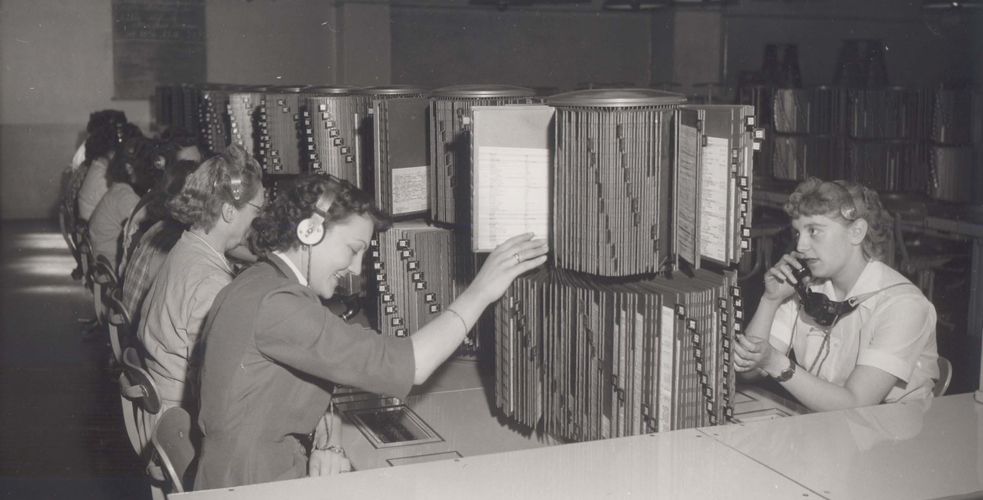
Orange France has announced the large-scale deployment of a tool for monitoring call center agents' conversations, enhanced with AI. According to management, this speech analytics tool will "enrich" the customer relationship. For one of the main trade unions, however, it is a mass surveillance tool, deployed illegally and without any consultation.

The system in question, MAIA, can listen to nearly one million conversations per month, with three thousand call center agents affected. CFE-CGC, one of the majority unions at Orange, states that this deployment was carried out illegally, without consultation with social partners. According to the union, it is preparing to refer the matter to the labour inspectorate and has provided the media with various elements supporting the claim that the tool's implementation was irregular. MAIA (Mon Assistant IA — My AI Assistant) is the speech analytics platform concerned. It enables real-time listening to customer calls, understands the meaning of conversations, finds the most relevant information to assist the agent, and summarises exchanges to import into the CRM.
The project began in December 2025 and is now in its industrial rollout phase.
What could be illegal about deploying this type of tool?
Deploying such tools in call centers is common practice and has been for some time, but AI has significantly boosted their performance and speed. In itself, this type of platform helps customer relations departments improve the customer experience, the employee experience, and the overall performance and relational approach of call centers. However, its deployment must be supervised and negotiated with social partners — something that, according to Sébastien Crozier, President of CFE-CGC, was not done. Furthermore, in the referral letter to the labour inspectorate, the same union mentions that the percentage of calls being listened to and recorded exceeds 50% — another legal issue, as quality monitoring and speech analytics tools must be used on a random, non-systematic basis.
The choice of an Anglo-Saxon vendor, Verint
A second issue, not raised by the union, may seem surprising: the choice of "Vérint" (misspelled in the official Orange management press release), when French tools are recognised as equally capable. Callity, for example, is a French tool developed by engineer Nicolas Panel (Arts et Métiers graduate) and is used by Magnolia, Acheel, Santiane (one of France's leading brokers), and CommeJ'aime. Faced with Verint and NICE, French players are admittedly few in number (Eloquant, Odigo, Cross-CX), but a certain technological laziness is undermining the growth opportunities of French pure players.
Why do large French groups not trust — or even consult — the competitors of Anglo-Saxon vendors? And where is the data from the millions of analysed and recorded phone conversations actually stored? This is no trivial question: Genesys, the American omnichannel platform widely deployed among major French operators and insurers (Bouygues Telecom uses it), struggles to provide written answers when questions of this kind are addressed to it, as was noted recently at a Genesys/CCaaS user club meeting.
At Orange, a legacy that everyone remembers
Some twenty years after the suicides at France Télécom — many of which were triggered by the mass transfer of staff to Orange call centers and a poorly explained and poorly understood drive for managerial and economic performance — the telecoms operator would do well not to treat this new technology deployment lightly. Meanwhile, at Teleperformance, the world's number one in customer relations, the rollout of a scheduling tool in call centers in 2016 gave rise to fears that bathroom break times were being measured on the floor.
"Everything related to customer relations optimised through technology is often poorly perceived, poorly explained, and triggers visceral reactions — sometimes even misleading media coverage," explains a specialist consultant. Former Orange employees have written on these topics, including Thierry Beistingel.
MAIA and Sharlie — the two AI assistants deployed at Orange (Sharlie being the one used at Sosh) — are set to generate controversy and add fuel to the simmering conflict that came to light in July 2025 between Orange management and the media-savvy Sébastien Crozier, who has been accused of unlawful conflicts of interest and directive management practices.
Contacted by our team, Laurence Thouveny, Head of Orange's Customer Service Unit, and David Viret Lange, Director of Enterprise France — both responsible for the units concerned — had not yet responded to our questions at the time of publication, nor had Jérôme Hénique, CEO of Orange France, or the Orange communications department, reached by email. In fairness, it must be noted that we only gave them an afternoon to respond. With AI, everything moves very fast — and thanks to speech analytics, corrective actions can be triggered in near real time.
Billions of phone conversations, better analysed — the new black gold
As a reminder, telecoms operators, energy suppliers, and the banking/insurance sector are the biggest "listeners" of phone conversations in France, given the volume of customer interactions they must handle — as are justice and police services, which make productive use of the PNIJ (National Judicial Interception Platform). Listening to and quickly understanding what is said in phone conversations serves far more purposes than upselling a subscription, arranging a payment plan, or providing information about a rescheduled delivery. The right speech analytics platform, properly used by agents who understand its benefits, is an enormously significant economic and HR matter.
Manuel Jacquinet
Cover photo: France Télécom CRT in Anjou © En-Contact