






Paris-Orly becomes first french airport to roll out a conversational AI agent for internal emergency calls
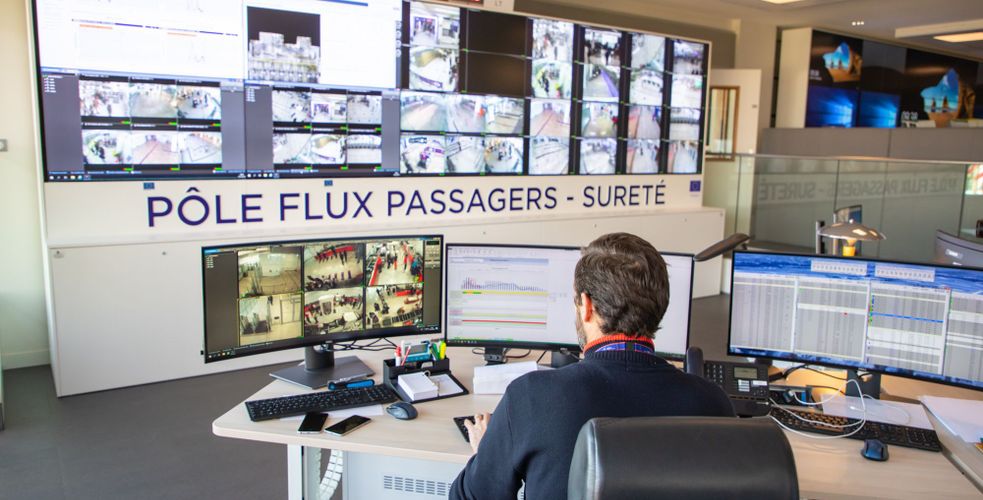
Baggage alert, terrorist attack, an Amazon Prime Boeing running off the runway... how do you reach Orly Airport in an emergency? It's an interesting question, but these aren't the situations handled by the APOC, rather, it deals with requests coming from the airport's own internal departments.
It could be described as an internal supervision center, tasked with receiving, qualifying, and processing urgent requests. That's why its phone number is kept secret. The recent rollout of an AI agent will help qualify and route these sometimes vital phone requests more quickly.
(…) The APOC is a secret location, tucked behind several doors and staircases. If the airport were a person, you'd happily assign it the role of heart or lungs, because every actor at the terminal is coordinated from here. They're the ones ensuring things run smoothly, from the plane on the tarmac to baggage claim, from customs clearance (no more than 10 minutes, stopwatch guaranteed) to the escalators and elevators, from your arrival by road to your terminal. The APOC and its dozens of cameras keep an eye on everything. Maella is one of six people who oversee all these operations (…), according to a Radio France report on one of the operational decision-makers at the APOC, Maella André.
The APOC, Paris-Orly's Airport Operations Centre, receives hundreds of calls every day, some of them high-stakes: breakdowns, malfunctions, medical emergencies, or operational incidents.
And every minute counts. For years, this type of unit relied on IVRs, interactive voice response systems ("press 1, press 2, press 3"), whose limitations are well known. ADP (Aéroports de Paris) decided to modernize this setup with a tailored team: call center operator Concentrix (formerly Webhelp), and Volubile.ai, the designer and orchestrator of AI agents.
The goal is simple: let every caller describe their need and location naturally, and let the AI understand, qualify, and route the call to the right contact, with no issues around call volume or language.
"No new number, no complicated process. No need to press any keys," says Stéphanie Delestre, co-founder of the software company based in Grenoble and Vitry-sur-Seine. "At Volubile, we deeply believe in one thing: the best AI isn't the one that makes the most noise. It's the one that concretely simplifies life for teams and users."
Volubile.ai has recently rolled out similar projects, at Homair, City-Drop, and Retif, where its agents aren't used to handle customer service requests but to drive store traffic and re-engage former customers.
ADP's CIO described the benefits of the project as follows
"At Paris-Orly, AI-assisted phone calls for better coordination of the various airport activities.
Malfunctions, breakdowns, medical emergencies, and more. Every day, the airport's operations command center (Airport Operation Centre, APOC) receives hundreds of calls from personnel involved in every function essential to its operation. To save time between the detection of an event and on-site intervention, this nerve center has just equipped itself with a new intelligent voice server that simplifies call routing. With no need to use the phone keypad, thanks to voice recognition, the conversational agent analyzes requests before automatically redirecting them to the right department.
What's changing in practice with this technology is described in a post written by David Krieff, ADP's CIO:
- Smooth, natural-language routing: thanks to the "voicebot" developed with our partners, the caller simply describes their need and location to be directed straight to the right department and get an appropriate response.
- A gradual transition, letting all users adapt at their own pace (the option of the old "press-key" system remains available at any time).
- Unchanged numbers: the contact numbers for reaching the APOC stay the same for operators.
- Real-time monitoring, allowing teams to analyze call volume and continuously optimize our knowledge base through data integration."
Comparable systems are emerging at other major hubs worldwide. Atlanta's Hartsfield-Jackson Airport, the world's busiest, has rolled out AI-driven operational dashboards built with Microsoft and Databricks, while Delta uses its own AI system to optimize baggage-handler routing in real time. Singapore's Changi Airport built an AI-powered virtual assistant for airport operations through its DIVA digital innovation unit with Accenture, alongside MAX, a public-facing chatbot; Istanbul's iGA Airport, for its part, has paired its own APOC with an NLP-based multichannel chatbot and, more recently, a video call center for travelers with visual or hearing impairments.
We tested 01-49-75-XY-OR, the APOC's phone number
It's a vital number, and not an easy one to find.
We tested it and reached the Orly APOC today to report, as part of this test, an abandoned bag in Zone 4. The call was picked up quickly, and the questions asked routed us to the security department.
To learn more about passenger experience news, whether in-flight or in airports, read about what United Airlines has been testing for the past few weeks in the US.
Cover picture © WTTJ pour Groupe ADP